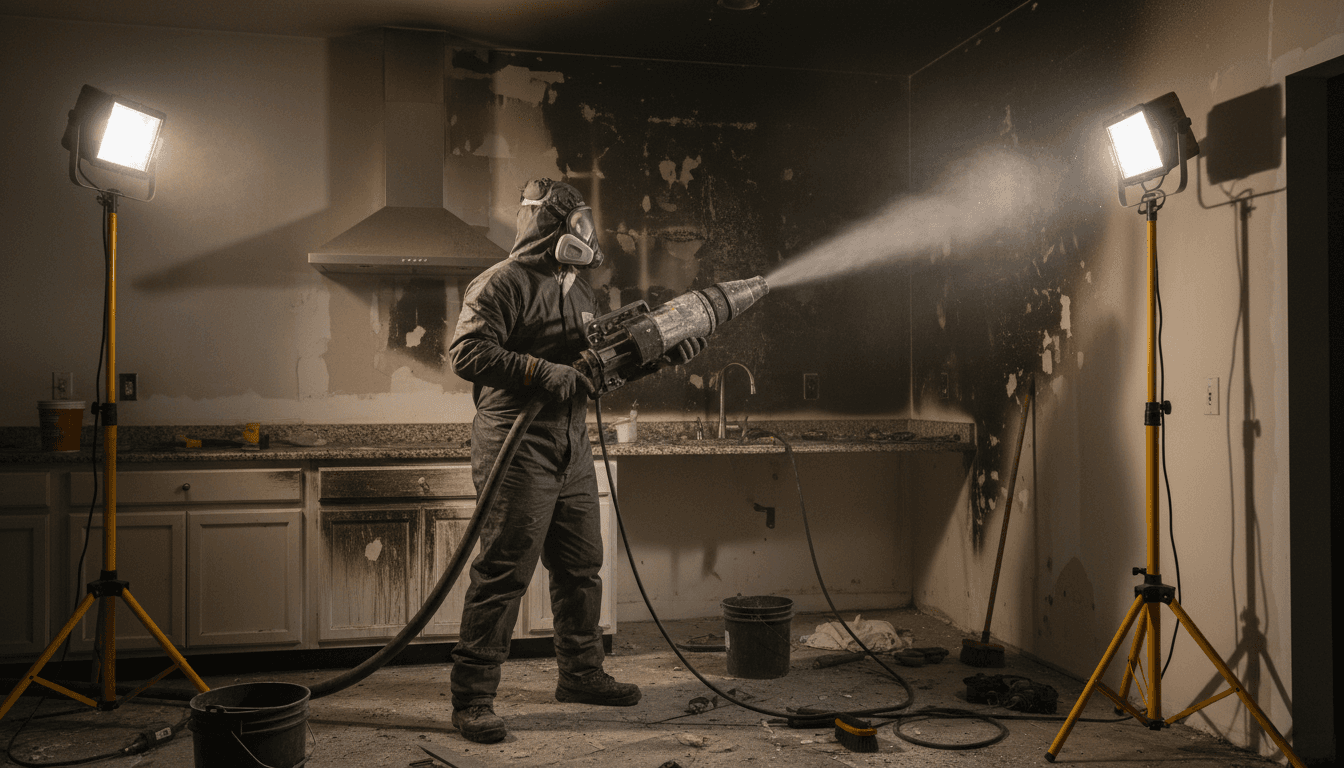
Smoke and soot don't stop at the room where the fire burned. They travel through ductwork, settle into carpet fibers, coat every porous surface, and embed themselves in places you can't see. Within hours of a fire, acidic soot residue begins etching into glass, corroding metal fixtures, and permanently staining fabrics. The longer it sits, the more expensive the damage becomes.
Charlotte's humid subtropical climate makes the problem worse. Moisture in the air bonds with soot particles and drives them deeper into porous materials like the hardwood floors common in Dilworth bungalows or the exposed brick found in NoDa lofts. What looks like a surface stain after 24 hours becomes a permanent discoloration within a week if left untreated.
Our smoke and soot cleanup crews serve homeowners and businesses across Mecklenburg County, from Plaza Midwood to Ballantyne, using commercial-grade equipment and IICRC-certified techniques that go far beyond what a standard cleaning crew can accomplish. Call (704) 471-3454 and we'll have a team on-site to assess the damage and begin stabilization.
Call Now — 24/7 Emergency Response
Why professional soot removal matters
Soot is not ordinary dirt. It is a complex mixture of carbon particles, oils, and chemical compounds produced by incomplete combustion. The composition varies depending on what burned — synthetic materials like carpet padding and vinyl flooring produce a sticky, protein-based soot that smears when wiped with a household cloth, while wood and paper fires leave a dry, powdery residue. Using the wrong cleaning method on the wrong type of soot permanently drives the residue into the material, turning a recoverable surface into one that needs replacement.
Professional soot removal begins with identifying the type of residue present and matching it to the correct solvent, technique, and equipment. Our technicians are trained to recognize the difference between dry smoke residue from a slow-burning fire and wet smoke residue from a smoldering blaze — a distinction that determines whether we use dry sponging, wet cleaning, or chemical application on each surface.
Charlotte homes built before the 1960s in neighborhoods like Myers Park, Eastover, and Elizabeth often feature plaster walls, horsehair insulation, and lathe construction. These materials absorb soot differently than modern drywall and fiberglass — they require lower-pressure cleaning methods to avoid crumbling the plaster while still extracting embedded residue. Our crews carry the specialized tools needed for both historic and contemporary construction.
Our smoke and soot cleanup process
Every job begins with a room-by-room assessment. We document the type of soot present, the materials affected, and the extent of penetration using moisture meters, particle counters, and thermal imaging where needed. This assessment feeds directly into the scope of work we submit to your insurance adjuster — accurate documentation from day one means fewer disputes later.
Phase one is dry cleaning. Using chemical sponges, HEPA-filtered vacuums, and compressed air, we remove loose soot particles from every surface before introducing any moisture. Skipping this step — a common shortcut taken by general contractors — pushes dry residue into the material and creates permanent staining.
Phase two is wet cleaning and degreasing. Depending on the surface, we apply alkaline cleaners for protein-based soot, solvent-based cleaners for synthetic residue, or specialized wood cleaners for hardwood and cabinetry. Charlotte kitchens with granite countertops and stainless steel appliances require particular care, as acidic soot can etch natural stone and pit metal finishes within days.
Phase three is sealing. After cleaning, we apply commercial-grade encapsulants to surfaces where micro-particles may remain embedded. This locks residual odor compounds into the material and provides a clean base for repainting or refinishing.
HVAC and ductwork decontamination
Charlotte homeowners run their HVAC systems roughly nine months out of the year. If a fire occurs while the system is running — or if someone turns the system on after a fire — soot gets pulled into the return vents and distributed through every room in the house. We've responded to calls in Steele Creek and University City where the fire was confined to the kitchen, but soot contamination spread to every bedroom through the duct system.
Our ductwork decontamination involves sealing each register, inserting negative air pressure equipment, and agitating deposits with rotating brushes and compressed air while HEPA filtration captures released particles. We then fog the system with an antimicrobial agent to address any mold spores that may have colonized the moisture-laden ducts. The blower motor, evaporator coil, and air handler cabinet are cleaned separately — these components trap fine particulate that a simple duct cleaning misses.
Protecting your health during cleanup
Soot particles are classified as PM2.5 — fine particulate matter small enough to bypass your nose and throat and lodge deep in lung tissue. Prolonged exposure aggravates asthma, triggers respiratory infections, and has been linked to cardiovascular stress. Children, the elderly, and anyone with pre-existing respiratory conditions are especially vulnerable.
During every cleanup, we establish containment barriers and run negative air machines with HEPA filtration to keep airborne particle counts below safe thresholds. We recommend that families with young children or immunocompromised members stay out of the home until our post-cleanup air quality testing confirms the space is safe. If you need temporary housing assistance, we can connect you with local resources and help you file for Additional Living Expenses through your homeowner's insurance.
Soot damage gets worse by the hour. Every minute that acidic residue sits on your surfaces, it's etching deeper and making restoration harder. Call (704) 471-3454 now for an immediate assessment — our Charlotte crews respond around the clock and can begin stabilization the same day. The longer you wait, the more it costs.
(704) 471-3454